Seasonal eating
What’s in Season? A Farmers Market Produce Guide
A practical season-by-season guide to likely farmers market finds, plus a better way to judge local availability.
Updated September 3, 2026 · 9 minute read
Season charts are useful, but they are not crop calendars carved in stone. A strawberry week in coastal California can arrive months before one in northern New England. Elevation, rainfall, protected growing, storage crops, and the year’s weather all move the dates.
USDA SNAP-Ed’s Seasonal Produce Guide makes the same essential caveat: availability varies with local growing conditions and weather. Use this national overview to form a shopping idea, then let your market show you what is actually abundant.
Spring: tender and quick
Likely finds include asparagus, peas, radishes, spring onions, lettuces, spinach, herbs, strawberries in warmer areas, and the last storage roots from winter.
Spring produce often rewards simple cooking. Roast asparagus, fold peas into pasta at the last minute, or use tender greens raw. The season can be brief because cool-weather crops bolt or turn bitter as heat arrives.
Ask a grower: “What arrived this week, and what only has a week or two left?”
Summer: broadest variety
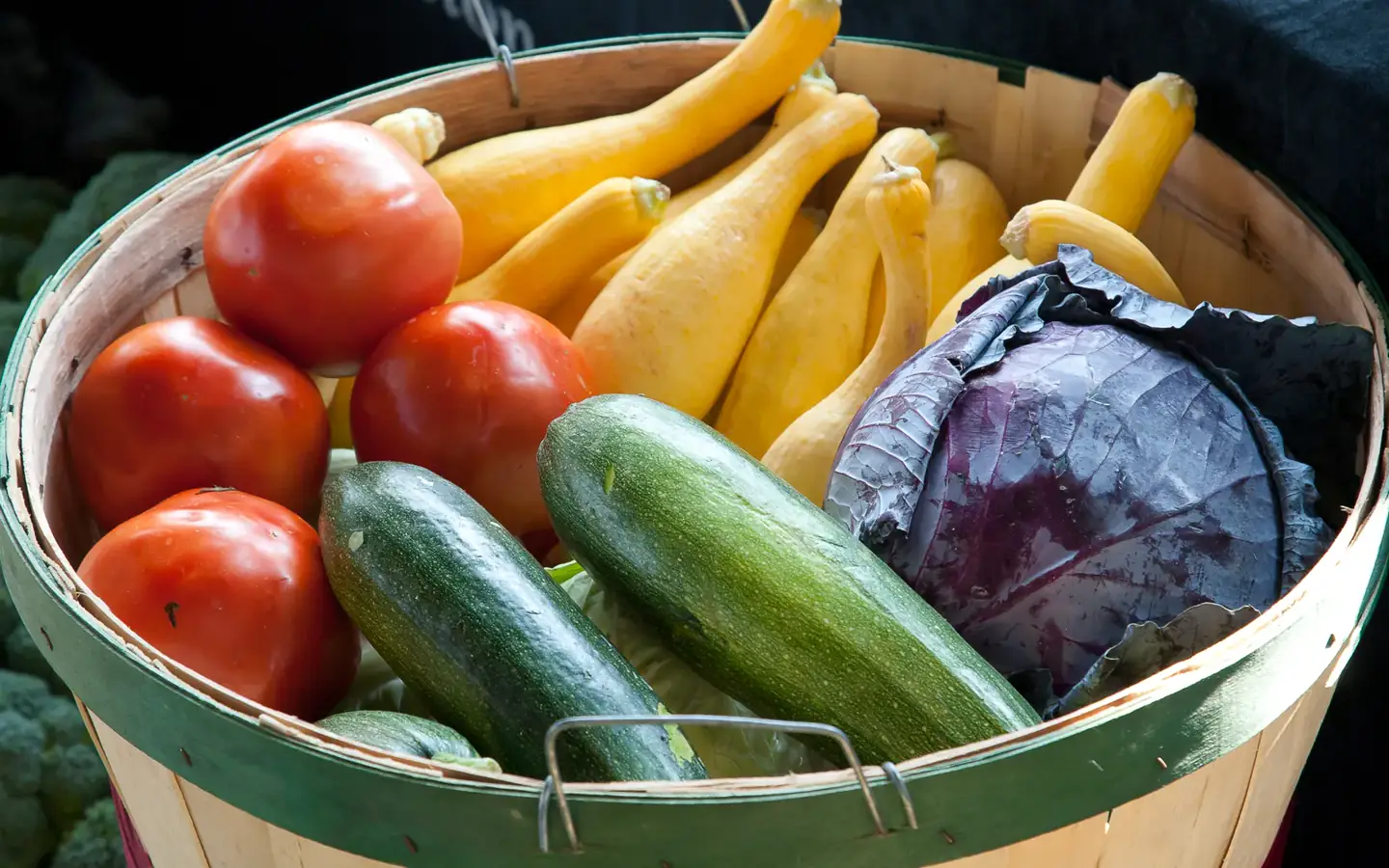
Depending on the region, summer brings berries, cherries, peaches, plums, melons, sweet corn, tomatoes, cucumbers, peppers, eggplant, beans, zucchini, okra, basil, and cut flowers.
Heat changes the market routine. Bring an insulated bag for eggs, dairy, meat, cut produce, and delicate berries. Shop for fragile items last, keep them out of a hot parked car, and refrigerate them promptly.
When zucchini or tomatoes are abundant, plan one “use now” meal and one preservation task. Freezing a sauce is more realistic for many households than taking on a large canning project.
Ask a grower: “Which tomato is best for sandwiches, and which is best for sauce?”
Fall: roots, fruit, and storage crops
Apples, pears, grapes, winter squash, pumpkins, sweet potatoes, potatoes, onions, beets, carrots, broccoli, cauliflower, cabbage, and hardy greens commonly define fall tables.
Not every pumpkin is pleasant to eat. Ask whether a variety is bred for cooking or decoration. For apples, ask whether you need a crisp eating apple, one that holds shape in a pie, or a softer sauce apple.
Ask a grower: “Which of these will store longest, and under what conditions?”
Winter: more than an empty field
Cold-region winter markets lean on storage crops, greenhouse greens, mushrooms, meat, eggs, dairy, grains, bread, preserves, and value-added foods. Milder regions may still harvest citrus, greens, brassicas, roots, and herbs.
“Year-round market” describes the market schedule, not a guarantee that every summer crop appears in January. The winter table is shaped by regional climate and how farms extend or store their harvest.
Ask a grower: “Was this recently harvested, stored, or grown under cover?”
How to recognize a local peak
Four signals are more reliable than a generic calendar:
- Several unrelated farm stalls display the same crop.
- Vendors offer multiple varieties or larger quantities.
- Growers suggest preserving, freezing, or buying a case.
- The crop tastes mature and the price is steady across the market.
Abundance does not always mean the lowest possible price, and seasonality does not prove local origin. Ask the vendor where and by whom the product was grown if that matters to your purchase.
Turn the season into a meal plan
Pick one item from each role:
- Eat raw: berries, tomatoes, cucumbers, snap peas.
- Cook tonight: greens, mushrooms, corn, eggplant.
- Hold for later: cabbage, apples, roots, winter squash.
- Flavor: herbs, garlic, onions, hot peppers.
This mix prevents every purchase from demanding attention on the same day. Use our interactive seasonal produce explorer to switch among seasons and broad U.S. climate regions.